
Higher Studies After Engineering
Taking a job first is a decision, not a delay
Students who take a job after engineering are often asked when they will 'actually study'. Plenty of people work for a few years and then do a master's or an MBA with a much clearer idea of why. This session looks at that route honestly: what it gives, what it costs, how to keep the later options alive, and how to know when the right time has come.
Explore this page6 sections
For many people, the best reason to study is something that work taught them.
People who go back to study after working usually describe it differently from people who go straight from college. They know what they are missing, which skills they need, which kind of programme will help and what it is worth paying for. Some say they would not have understood the course if they had taken it earlier.
Others find that a job, a salary and a life make it harder to leave. Both accounts are true. The session shows both, so that a student taking a job knows what they are choosing and what to protect.
What the session covers
33 topics across 7 areas. Seven parts of the work-first route. 6 apply to almost any business; the rest only in a particular case.
What Working First GivesMore than money.5
- Income, and a chance to save or reduce the borrowing needed later
- A real sense of what you like and dislike at work
- Experience, which many programmes value and which makes applications more specific
- Colleagues and managers who can write informed recommendations
- Time to find out whether the degree is wanted or only assumed
What It CostsHonestly stated.5
- Study habits fade, and returning takes effort
- Responsibilities and commitments grow, and it gets harder to leave a salary
- Some programmes and some scholarships have age or experience limits, so check them
- A first job that is a poor fit can sap energy for study
- Friends who went straight to a degree may seem ahead for a while
None of these is a reason to avoid working first. They are reasons to do it deliberately.
Choosing a First Job That HelpsNot any job will do.5
- Roles that build skills a later programme would value
- Employers who give real responsibility early
- Whether the employer offers study leave, sponsorship or flexibility
- Reading the offer carefully for bonds and service agreements
- Avoiding roles that lock you in with penalties for leaving
Keeping the Options AliveSome scores expire, and some deadlines do not wait.5
Some students take an exam in the final year as insurance, so the score is waiting when they need it. Others prefer to wait and take it with a clearer purpose.
- A GATE score stays valid for three years, a GRE score is reported for five, and a CAT score lasts one year for its cycle
- Check the current validity on each official site, as policies are revised
- Keep notes and marksheets in order for later applications
- Keep up some study, perhaps one course a year, to hold the habit
- Build a relationship with at least one person who could write a recommendation
Saving and Money PlanningIf it appliesA plan, not a promise.4
- Estimating what a future course would cost, and working back to a monthly saving
- Keeping the saving separate from everyday money
- What a partial loan would look like, if savings fall short
- How family responsibilities change the calculation
How Later Applications ReadWork experience is a story you tell.4
- Explaining why you now want the degree, in terms of what work showed you
- Showing what you learned and achieved, in specifics
- Not apologising for the time between degrees
- Choosing a programme that welcomes experienced students
When Is It Time?No fixed number of years.5
- You can name what you want from the course, and it is not available at work
- You have a clear plan for the cost
- A programme you want exists, and you meet its requirements
- You have asked your employer about study leave or sponsorship
- Going would still make sense if the job market were weaker than expected
A plan students sketch
- What they hope a first job will teach them
- Which later routes they want to keep open
- Which scores and deadlines they need to watch
- Who they will ask for a recommendation
- A date, a year or two ahead, to review the plan
What this session does not do
- Say that working first is better than studying
- Recommend a particular employer or sector
- Promise that a later admission will be easier
- Replace reading the terms of an offer in full
How the session runs
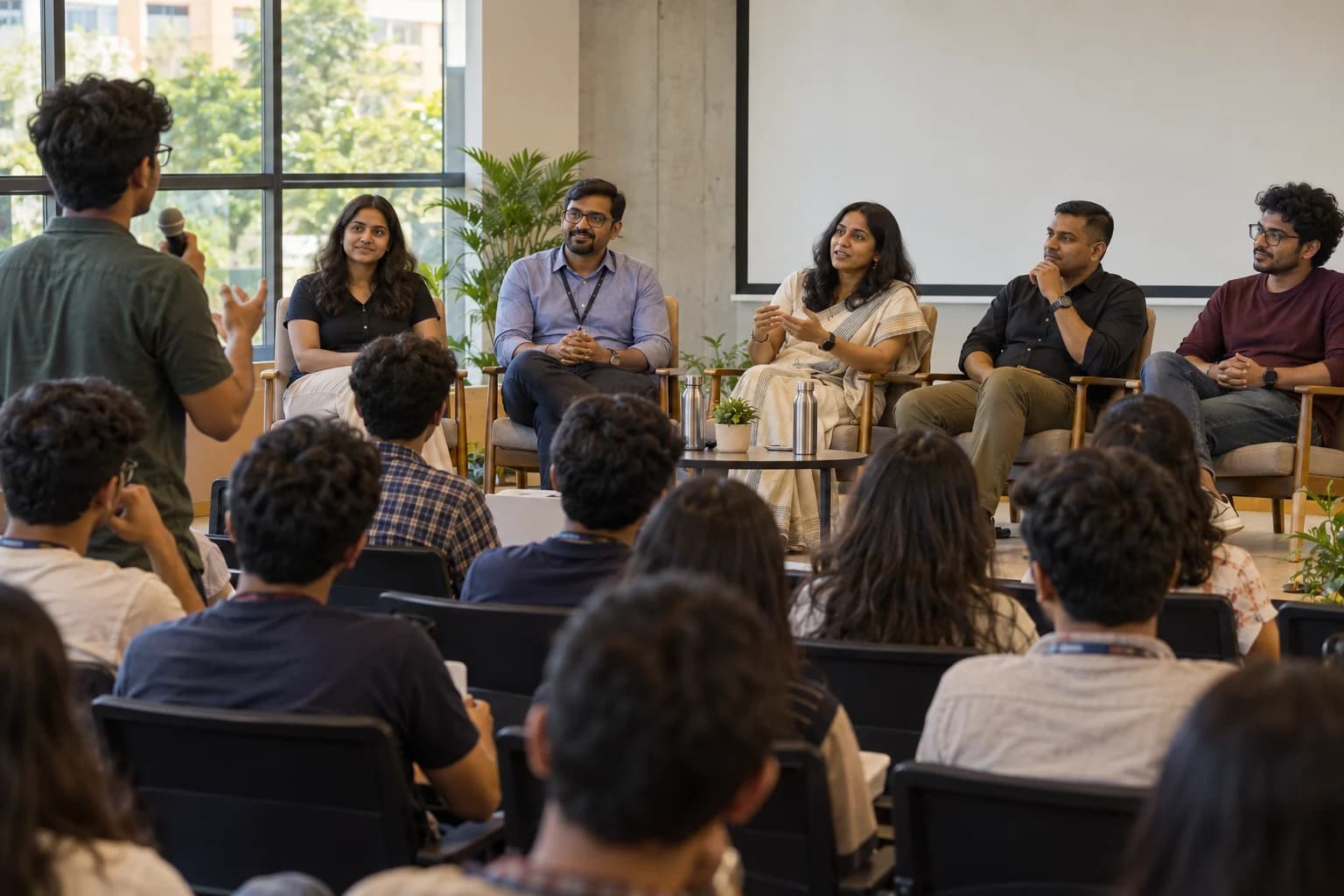
People who worked for a few years before a master's or MBA, people who worked first and decided not to study further, and someone who went straight to a degree describe what they did and how it turned out. Students then sketch a plan for their own first two years and note what to watch. Speakers describe their own experience and agree not to promote any service or recruit for their employer.
What your students leave with
- What working first gives you, apart from a salary
- What it costs, so the choice is not made in a rosy light
- Which routes stay open after two or three years, and which have limits
- How scores and applications behave over time
- Habits that keep the option of study alive while working
- Signs that it might be the right time to go back
Scheduled sessions
Nothing scheduled yet
Sessions are arranged with a college once a date is agreed. Ask us and we will find the right person for it.
A student rather than a college? See what is coming up, or ask your placement team to host this.
Work first, with a plan for later.
Tell us who your students are and what stage they are at. Sessions are free for participants.