
Higher Studies After Engineering
The hardest decision is the one with two good options
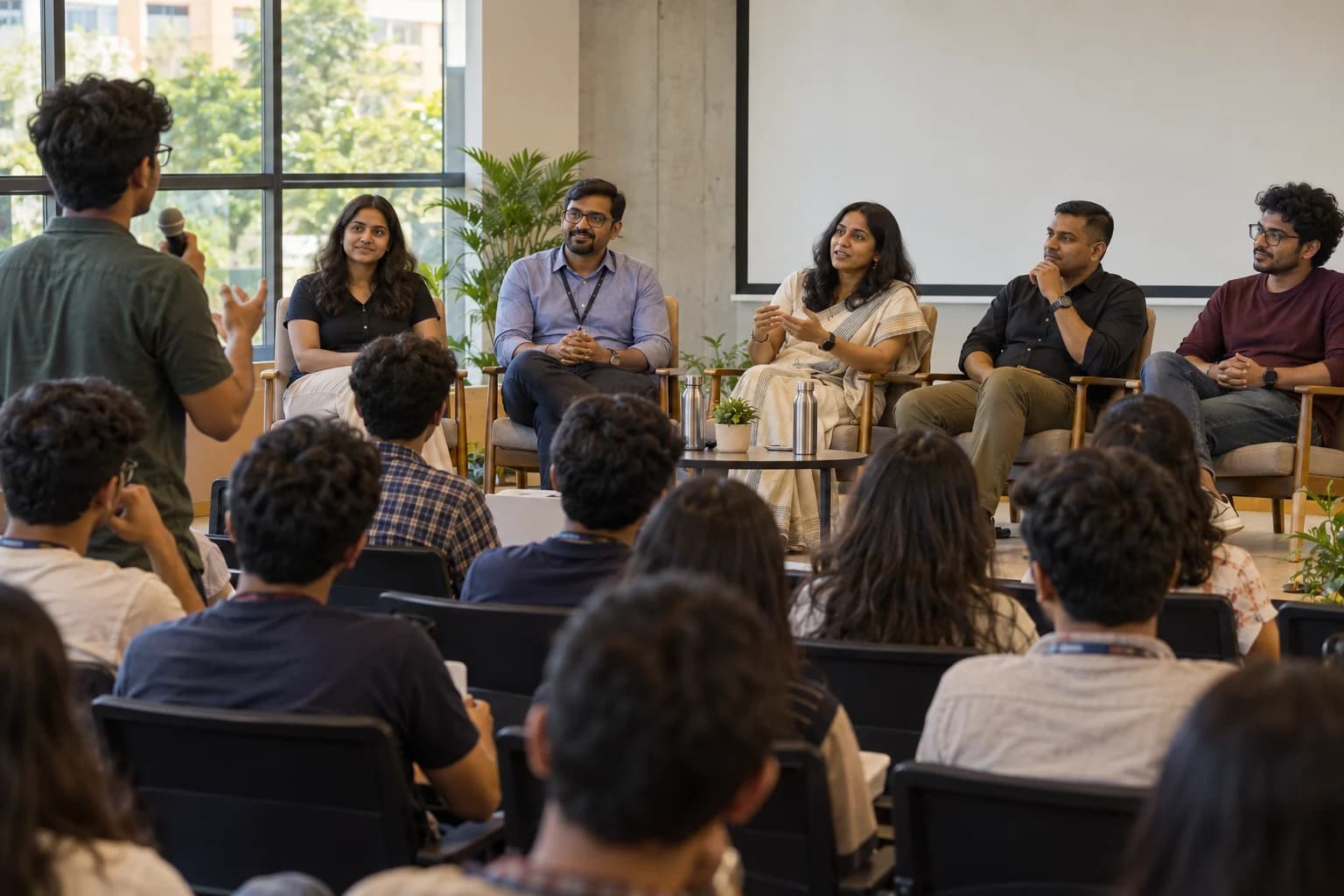
A final-year student with an offer and a chance at a master's is told by everyone what to do. This session slows that down. People who faced the same choice, and went either way, describe what they weighed, what they would ask now, and how they handled the conversation with their families.
Explore this page6 sections
Advice from others is loudest at the moment you most need your own view.
Relatives, seniors and friends will have strong views, usually based on the choice they made or wish they had. A student weighing an offer against a master's needs facts about both: what the offer actually says, what the study actually costs and what can be put off.
The right answer is different for different people. The session gives students a way of working it out for themselves, and of explaining it to the people who care about them.
What the session covers
35 topics across 7 areas. Seven parts of the decision. 6 apply to almost any business; the rest only in a particular case.
Laying Out Both OptionsOn one page, in the same terms.5
- What you would be doing in the first year of each
- What each costs, and what each pays
- What each leaves open and what each closes
- What happens in each if it does not go well
- What you want to be doing in five years, and which gets you closer
Reading the OfferBefore accepting, and before declining.5
- The pay and its fixed and variable parts, in take-home terms
- Probation, notice period and any service agreement or bond
- The joining date, and whether it can be moved
- What the role actually is, and what you would learn
- Whether the offer has an expiry, and what the employer says if you ask for time
A genuine employer never asks you to pay to hold or process an offer.
Reading the Study OptionAs carefully as the offer.5
- Is it an admission in hand, or a hope?
- What the programme costs in full, and how it would be funded
- Whether any funding or scholarship has been confirmed in writing
- What the programme leads to, and who it has led to it
- What the rules, the cost and the exam validity look like if you wait a year
What Can Be PostponedThe question that changes many decisions.5
Many options which seem to close on a certain date turn out to have a way to be postponed. Ask the employer and the programme directly, in writing, before deciding that they cannot.
- Can the offer be deferred, and for how long?
- Will an admission be held for a year, or must it be taken now?
- How long do exam scores remain valid?
- Could you take the job now and reapply later with more to show?
- Which deadlines do not move at all?
Testing for ReversibilitySome choices are easier to undo than others.5
- If I take the job and want to study, what stops me?
- If I study and want to work, what have I given up?
- How much borrowing would I carry, whichever way I go?
- Which choice would I regret more if it did not work out?
- Which keeps more options alive for the next two years?
The more reversible choice is not always the right one, but it deserves to be named.
Talking It Through at HomeFamilies have their own hopes and fears.5
- Share the one-page comparison, not only a conclusion
- Ask what each person is most worried about, and listen
- Separate facts that can be checked from opinions
- Agree who is paying for what, and what the limit is
- Agree a date for the decision, and who will make it
Deciding, and Moving OnIf it appliesA decision is only useful if it is made.5
- Set a decision date and honour it
- Write down why you chose, so you can recall it in a hard month
- Tell the other side promptly and politely
- Plan what to do in the first three months of whichever you chose
- Set a date to review the choice, without punishing yourself
A one-page comparison to fill in
- The offer and the study option, side by side
- Costs, pay and funding for each
- What can be postponed, with the answer in writing
- Reasons to choose each, and the worst case for each
- A decision date, and who needs to be told
What this session does not do
- Tell any student what to choose
- Favour working over studying, or studying over working
- Review an individual offer letter, or advise on its legality
- Promise that either option will turn out well
How the session runs
Two or three people describe a time they held an offer and a further-study option at once, what they weighed, and how it turned out, one of whom took the job, one of whom studied, and ideally one of whom did both in sequence. Students then fill in the one-page comparison for their own situation, in pairs, with the speakers moving between them. Speakers describe their own experience and agree not to promote any service, employer or programme.
What your students leave with
- A clear way to lay the two options side by side
- What to read in an offer letter before accepting or declining
- What can and cannot be postponed on each side
- A test for whether the decision can be reversed
- A way to talk it through with family without it becoming an argument
- A date by which to decide, and what to do on that date
Scheduled sessions
Nothing scheduled yet
Sessions are arranged with a college once a date is agreed. Ask us and we will find the right person for it.
A student rather than a college? See what is coming up, or ask your placement team to host this.
Two good options deserve a decision, not a drift.
Tell us who your students are and what stage they are at. Sessions are free for participants.