
Alumni Back on Campus
Nobody tells students what the first year is actually like
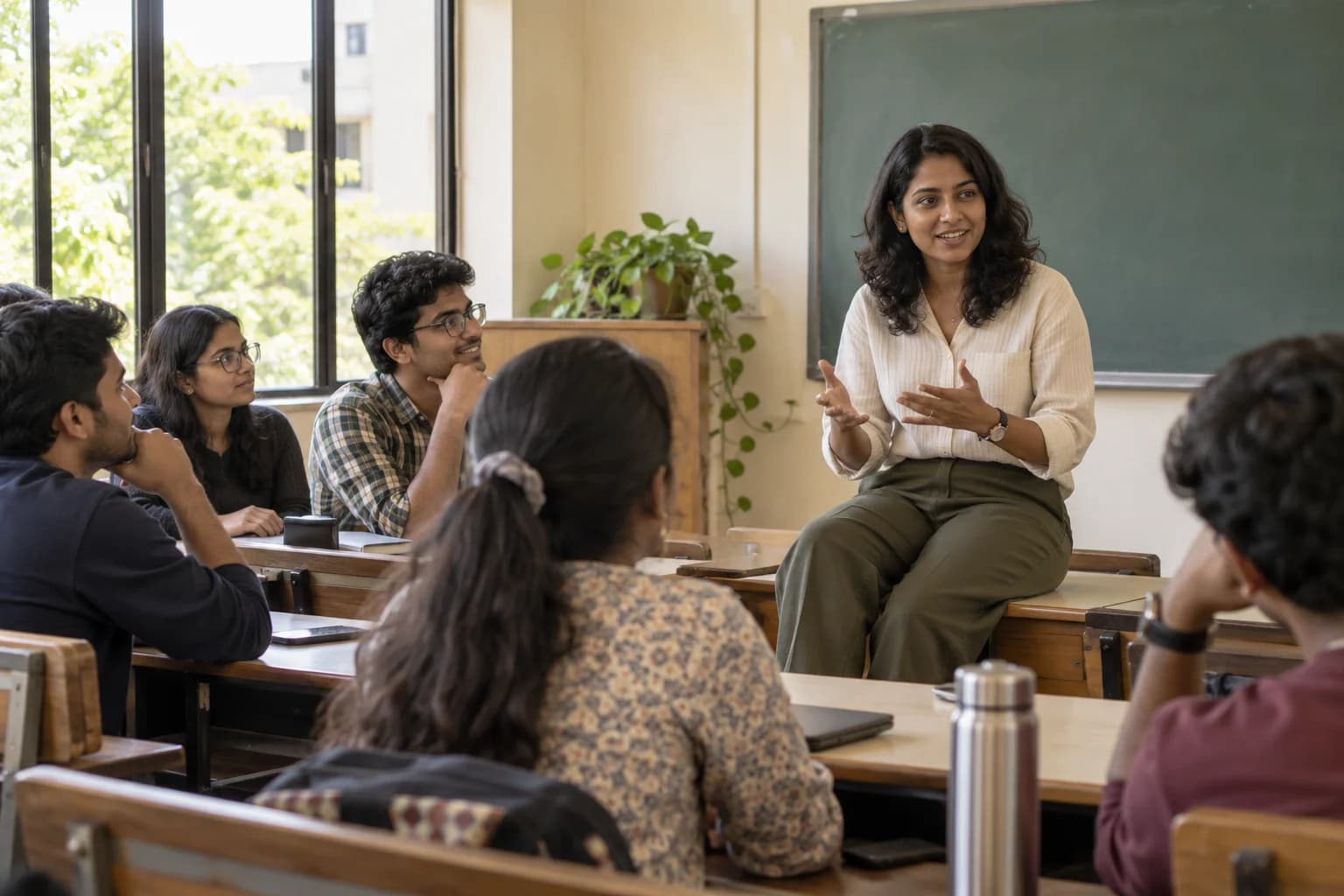
Students picture the job as a title and a salary. The first year is something else: unfamiliar tools, a manager to read, small tasks that pile up, and a first review. In this session an alumnus from your own college describes those twelve months as they were, including the dull days, and students ask whatever they want to know.
Explore this page6 sections
The first year is where most surprises are, and where students have the least information.
College prepares students for an examination. The first year of work asks for something different: reading a situation, finding out who to ask, and being useful before you feel ready. Seniors who went through it can describe it, but those conversations happen by chance, in a hostel corridor or on a family visit.
An alumnus from the same college has the advantage of a shared starting point. They remember the syllabus, the faculty and the placement season, so they can say what changed on the other side of it without having to explain where the student is coming from.
The session does not predict what any student's first year will be. Every company, team and manager is different. It gives students a set of honest examples from one person, and a better set of questions to ask the next person.
What the speaker is briefed to cover
33 topics across 7 areas. Seven parts of the first year, taken in the order it happened.
The First WeekBefore there is any real work.5
- What joining actually involved: forms, accounts, introductions
- Who they met first, and who turned out to matter
- What they were told on day one, and what they were not told
- How long it took to find their way around
- What they wish they had asked in the first few days
The aim is to describe the week, not to give a checklist that may not fit another employer.
The First Three MonthsLearning how the work is done.5
- What a normal day contained, in the first month
- What training, a mentor or a buddy looked like, if there was one
- The first task they were trusted with, and how it went
- How they learned tools that college had not covered
- When they first felt useful, and what changed
What Was Harder Than ExpectedThe part students rarely hear about.5
Speakers are asked to include at least one thing they handled badly. Students learn more from an honest mistake than from a smooth story.
- Work that was unclear, with nobody to say what finished looked like
- Feedback that arrived late or in a form that stung
- Hours, travel or shifts that were different from what they pictured
- Being the newest person in a team that already had its habits
- A month when they doubted the choice, and what they did
What Was Easier Than ExpectedGood news is also part of the picture.4
- Things college had prepared them for after all
- People who were generous with their time
- Mistakes that turned out to be forgiven
- Tasks that looked big and turned out small
People, Manager and Asking for HelpThe part that decides how a first year feels.5
- How they worked out what their manager expected
- How and when they asked for help, and what worked
- How they handled a disagreement or a misunderstanding
- Who they went to when the manager was not the right person
- What they would say to a new joiner about asking questions
Most students are more worried about looking foolish than about getting it wrong. Hearing that others felt the same helps.
Paperwork, Probation and PayKept general: it differs between employers.5
The speaker is not asked to give figures or advise on anyone's contract. If a student asks about pay, the speaker can decline politely and suggest reading the offer letter and job description for the role in question.
- Whether the offer letter matched what they experienced
- What probation meant in practice, and how the review went
- What they checked, or wish they had checked, in the letter
- How the first salary and its deductions compared with expectations
- Whom they asked when something in the paperwork was unclear
The First Review and the Year AfterHow it ended, and what came next.4
- How the first review or appraisal conversation went
- What they were told to do more of and less of
- What they would change about their first twelve months
- What they would tell themselves on the day before joining
What the alumnus prepares
- A short account of their first year, with a few real days described
- One thing they handled well and one they handled badly
- What they would tell a student who is about to join somewhere
- A willingness to say 'I do not know' or 'that was only my team'
What students can ask
- What was your first month actually like?
- Who helped you most, and how did you find them?
- What did you not know that you were expected to know?
- Was there a time you thought you had chosen wrongly?
- What should I read carefully before I accept an offer?
How the session runs
The alumnus speaks for about fifteen minutes from a few notes, not a presentation, and the rest of the time goes to questions. Students can send questions in advance or on paper, and a GullyFuture facilitator keeps the conversation moving and asks the first question if the room is quiet. Before the day, the speaker is briefed on what to cover, on not promoting an employer, a course or a business, and on saying clearly that theirs is one path. A member of the college's staff stays in the room for the whole session. The length and group are agreed with the college in advance.
What your students leave with
- A realistic picture of the first week, the first month and the first review
- A clearer idea of what a normal working day contains
- Knowing which problems of the first year are common and which are worth raising
- An understanding of how a new joiner is expected to ask for help
- A better sense of what to read in an offer letter before joining
- Questions students can still put to a senior after the session
Scheduled sessions
Nothing scheduled yet
Sessions are arranged with a college once a date is agreed. Ask us and we will find the right person for it.
A student rather than a college? See what is coming up, or ask your placement team to host this.
Let students hear the first year from somebody who sat in their classroom.
Tell us who your students are and what stage they are at. Sessions are free for participants.