
Alumni Back on Campus
Every first job has a story, and it is rarely the one on the congratulations post
Students see the announcement: the company, the role, the congratulations. They do not see the applications that went unanswered, the round that went badly, or the friend who made an introduction. An alumnus tells the whole route, as it happened, so students can plan their own search with a better idea of what one looks like.
Explore this page6 sections
A success story hides everything a student would need to copy it.
When one student is placed, the others see a result. They do not see how many applications it took, which round was hardest, or whether luck had anything to do with it. Without that, a student who is not placed on the first attempt tends to think something is wrong with them.
The session replaces the result with the route. The speaker is asked to describe what they did, in order, including what did not work. Students can then compare with their own search and see which steps they are missing, or that they are further along than they thought.
One search is one example. The speaker is asked to say so, and students are encouraged to ask several alumni about their own routes.
What the speaker is briefed to cover
33 topics across 7 areas. Seven parts of a search, told in order.
Where They StartedThe position before the search.5
- What they were aiming at, and how clear that was
- What their resume looked like and how it changed
- Which skills and projects they had to show
- What they were worried about, and whether it turned out to matter
- What their family expected, and how that shaped the search
The Route That Led to the JobWhich door it came through.5
Different routes work for different students. The speaker describes theirs without suggesting it is the one to follow.
- Campus placement, off-campus application, referral, internship or something else
- How they heard about the opening
- Who helped, and how they came to help
- How long it took from first application to offer
- What they would try first if they were starting again
What Did Not WorkThe half of the story that is usually left out.5
- Applications that received no reply
- Interviews that went badly, and what they learned
- Advice they followed that turned out unhelpful
- Time spent on preparation that did not pay off
- How they felt during the weeks of waiting
Hearing that a search was messy is, for many students, the most useful thing in the session.
The Rounds, From the InsideWhat each stage felt like and what it tested.5
The speaker describes their own process only. Companies and roles differ, and students should check the process of any employer they apply to.
- Written test or screening, where there was one
- Group discussion or case, where there was one
- Technical or subject interview
- HR or managerial round
- How they prepared for each, and how they would prepare now
The OfferFrom the call to the signature.5
- How the offer arrived and how long they had to reply
- What they read in the letter, and what they asked about
- How they decided between two options, if they had two
- What happened between the offer and the joining date
- What they would check differently now
No figures are asked for. If a student asks about pay, the speaker may decline.
Luck, Timing and Honest LimitsWhat was not in their control.4
- The part that was timing or chance
- Things that might have gone differently for someone with another background
- How the market at the time shaped their options
- What they know has changed since they searched
If Campus Is Not an OptionFor students whose drives did not work out.4
- How off-campus search differs from campus placement
- How to ask for a referral without being a nuisance
- Where alumni and seniors fit into a search
- How to keep going without losing the thread
What the alumnus prepares
- A timeline of their search, from first application to joining
- Two things that worked and two that did not
- A description of one interview round that went badly
- The advice they were given and what they would tell students now
What students can ask
- How many applications did you send, and how many replied?
- Which round was the hardest, and why?
- How did you hear about the job?
- What did you do while waiting?
- What would you do differently, starting again today?
How the session runs
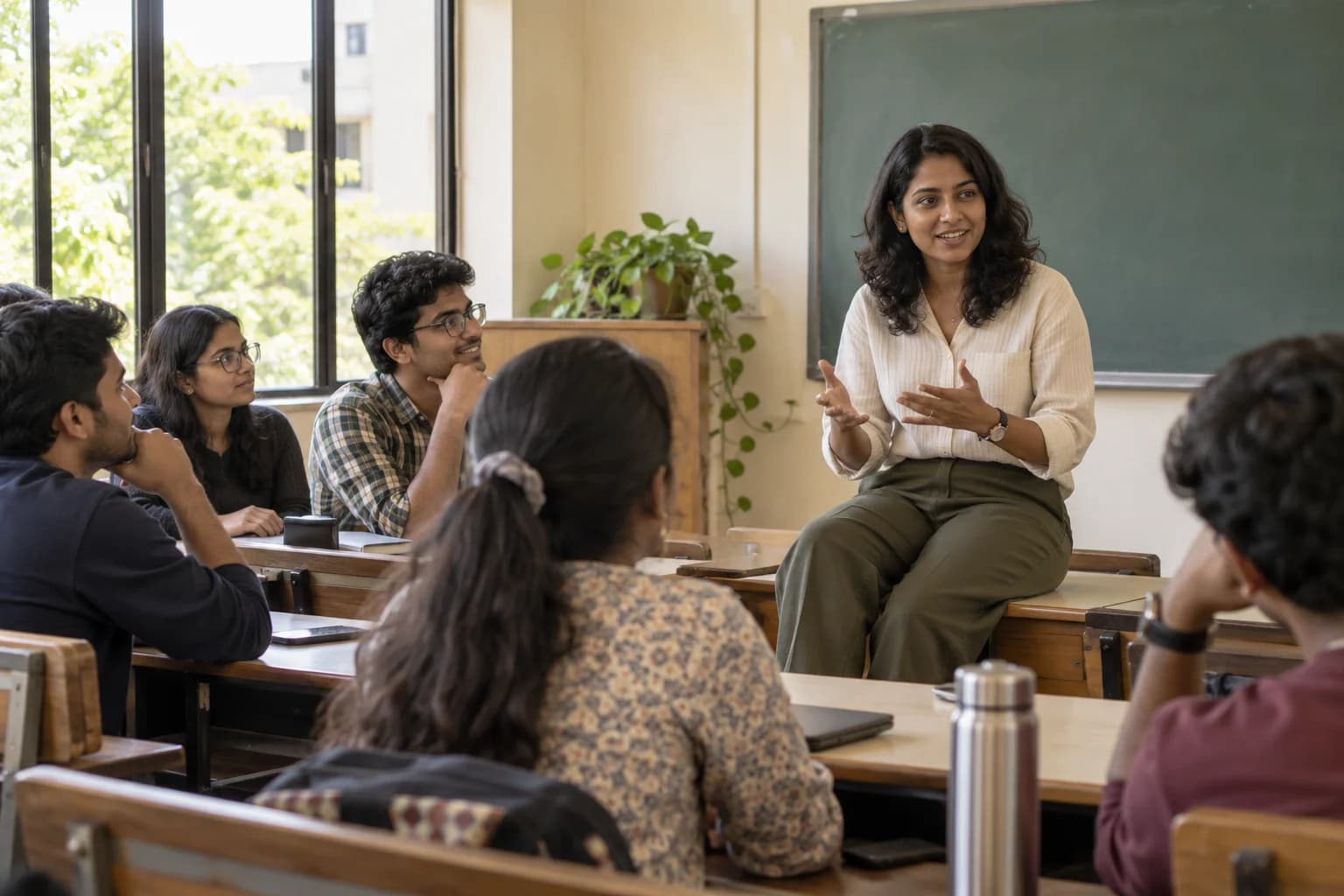
The alumnus describes the search as a timeline in about fifteen minutes, then takes questions. A GullyFuture facilitator helps students put questions about each stage and keeps the discussion to the speaker's own experience. Students can submit questions on paper, which helps those who would not speak in a full room. The speaker is briefed not to pitch an employer or recruit, and a staff member from the college stays throughout.
What your students leave with
- A real example of how one graduate from your college found work
- An understanding of the different routes: campus, off-campus, referrals, internships
- An honest view of how long a search can take and what it feels like
- Ideas for what to try when the first approach does not work
- A better sense of what interview rounds look like from the inside
- Questions to ask other seniors about their own routes
Scheduled sessions
Nothing scheduled yet
Sessions are arranged with a college once a date is agreed. Ask us and we will find the right person for it.
A student rather than a college? See what is coming up, or ask your placement team to host this.
Show students the route, not just the result.
Tell us who your students are and what stage they are at. Sessions are free for participants.