
Higher Studies After Engineering
A plan that only works if the rules stay the same is not a plan
Many MS plans quietly assume that a student can work in the country after the degree, for a set period, and earn enough to repay the loan. Governments change these rules, sometimes with little notice. This session explains what to check, where to check it, and how to build a plan that still makes sense if the rules turn out less generous than expected.
Explore this page6 sections
These rules are set by governments responding to their own politics.
Visa and post-study work rules are shaped by employment, housing and migration debates in the destination country, not by what students were promised. In recent years several of the main destinations have announced changes to the number of students admitted, to the length of post-study work permission, to fees, and to what graduates must show in order to stay.
No one can say what the rules will be when a student who applies this year graduates in two. That is not a reason to give up on studying abroad. It is a reason to avoid plans where everything depends on one rule staying exactly as it is today.
What the session covers
34 topics across 7 areas. Seven things to check and to plan for. 6 apply to almost any business; the rest only in a particular case.
The Three Questions in Every CountryAsk them of each country you are considering.5
- What does it take to get and keep a student visa?
- How much may a student work during the course?
- What is allowed after graduation, for how long, and what does it lead to?
- How recently have each of these changed?
- What has the government said it is considering next?
Read the answers on the official government immigration website, dated, not in a forum thread.
Examples of ChangeTo show the pattern, not to predict your year.5
These are examples as they stood when this page was written. Each of them can change, and some will have changed by the time you read it, so check the current position for yourself.
- The United Kingdom has announced a shorter post-study Graduate Route for applications from January 2027, with a longer one for doctoral graduates
- Canada has set limits on the number of study permits, and ties post-graduation work permits for some programmes to eligible fields of study
- Australia has changed visa fees and set a planning level for new international students
- The United States has been changing rules on how long students may stay, on practical training after study, and on work visas
- Germany allows graduates a period to look for work after study, with conditions on funds and on how long they may stay
Work During StudyUseful, limited, and not a way to fund the degree.5
- Most countries cap the hours a student may work
- On-campus and off-campus work can follow different rules
- Some courses include paid internships or placements
- Breaking the conditions can put the visa at risk
- Do not plan to fund tuition from part-time work
Work After StudyWhere most plans are built, and where most change happens.5
- How long the permission lasts, and whether it depends on the level or the subject
- Whether a job offer, a minimum salary or a shortage list is required to continue
- What the next step is after the post-study permission ends
- Whether time on the permission counts towards anything else
- How the rules treat employers who hire graduates
Post-study permission is a window to find work. It is not a guarantee that there will be work.
Reading an AnnouncementHeadlines are not rules.5
- Find the official statement or the legal text, not the news report
- Find the date from which the change applies
- Check whether it applies to people already enrolled or already admitted
- Ask the university's international office how it affects your course
- Wait for the final rule before changing a plan on the strength of a proposal
Making the Plan Rule-ProofA plan that can bend.5
- Ask whether the degree is worth its cost even if you return to India after it
- Borrow no more than you could comfortably repay on an Indian salary, if staying abroad does not work out
- Choose a course for what it teaches, not only for the work permission attached to the country
- Keep a second country or a return plan in mind
- Treat any extra years abroad as a bonus, not as the basis of the budget
Talking It Through at HomeIf it appliesFamilies often hear one half of this.4
- What the family is assuming about staying abroad
- What happens to repayments if the student returns
- How to hold the conversation without blame if rules change
- A date for reviewing the plan before each big payment
A checking routine
- The official immigration site for each country, bookmarked
- The university's international student office for course-specific questions
- A dated note of what you read, so you can see if it later changes
- A review before each fee payment and before accepting an offer
What this session does not do
- Give legal or immigration advice
- Predict what any country will decide
- Recommend an immigration agent or a lawyer
- Promise that staying abroad after study will be possible
How the session runs
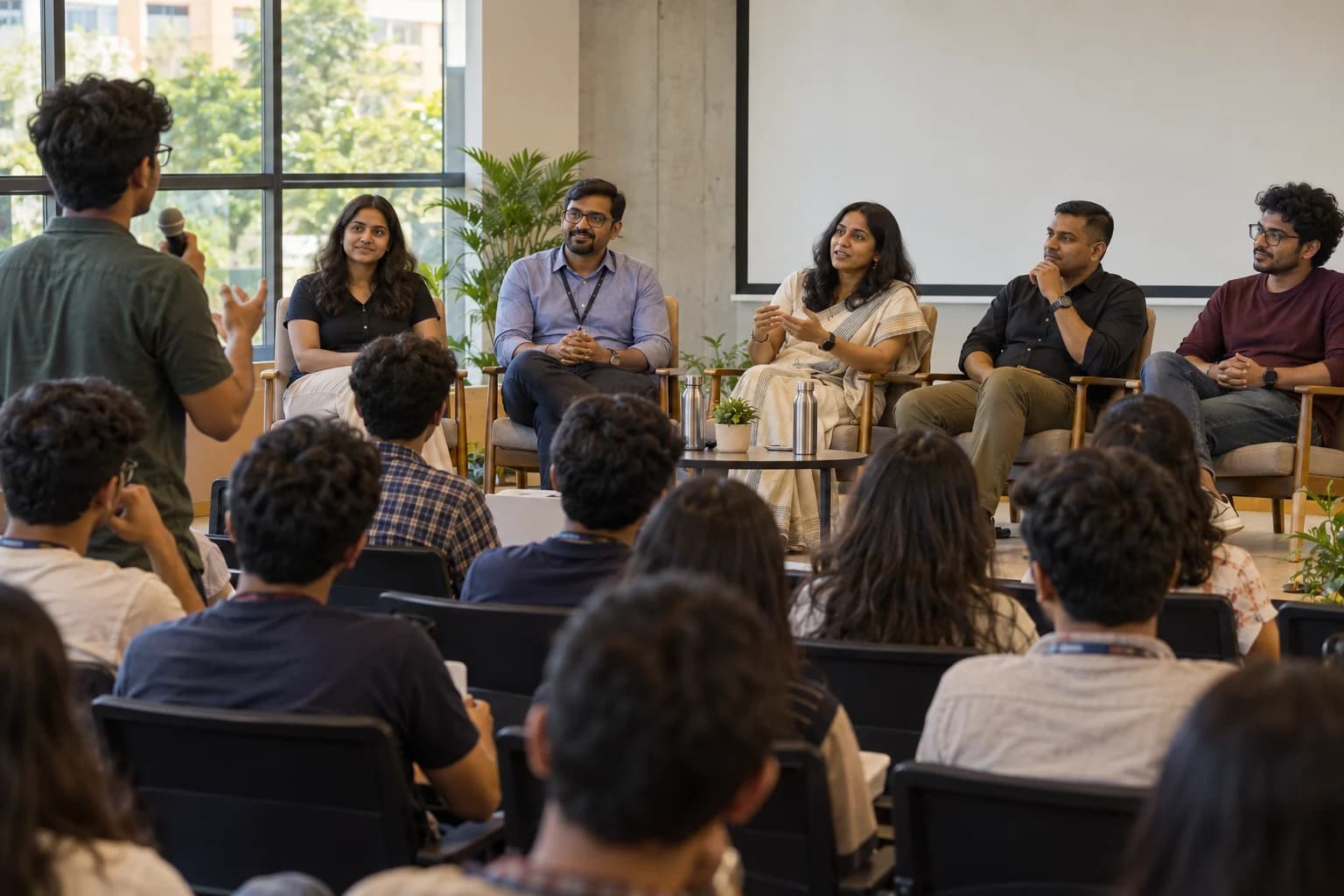
A facilitator explains how to read the current position in each destination, using recent examples of change. People who studied abroad, including some who returned to India and some who stayed, describe how the rules affected them and what they would plan differently. Students then take a sample plan and test it against a less generous rule. Speakers are not immigration advisers and say so, and students are directed to official sources for the current rules.
What your students leave with
- An understanding of why these rules change, and how often
- What to check in each country: study, work during study, work after study
- Where the official information is, and why a forum or an agent is not enough
- How to read a rule change announced after you have applied
- A plan that still works if staying abroad turns out harder than expected
- Questions to ask a university, a lender and a family member
Scheduled sessions
Nothing scheduled yet
Sessions are arranged with a college once a date is agreed. Ask us and we will find the right person for it.
A student rather than a college? See what is coming up, or ask your placement team to host this.
Plan for the rules you might get, not only the ones you hope for.
Tell us who your students are and what stage they are at. Sessions are free for participants.