
Finance & Cash Flow
Most applications are weakened before the bank has read a single page.
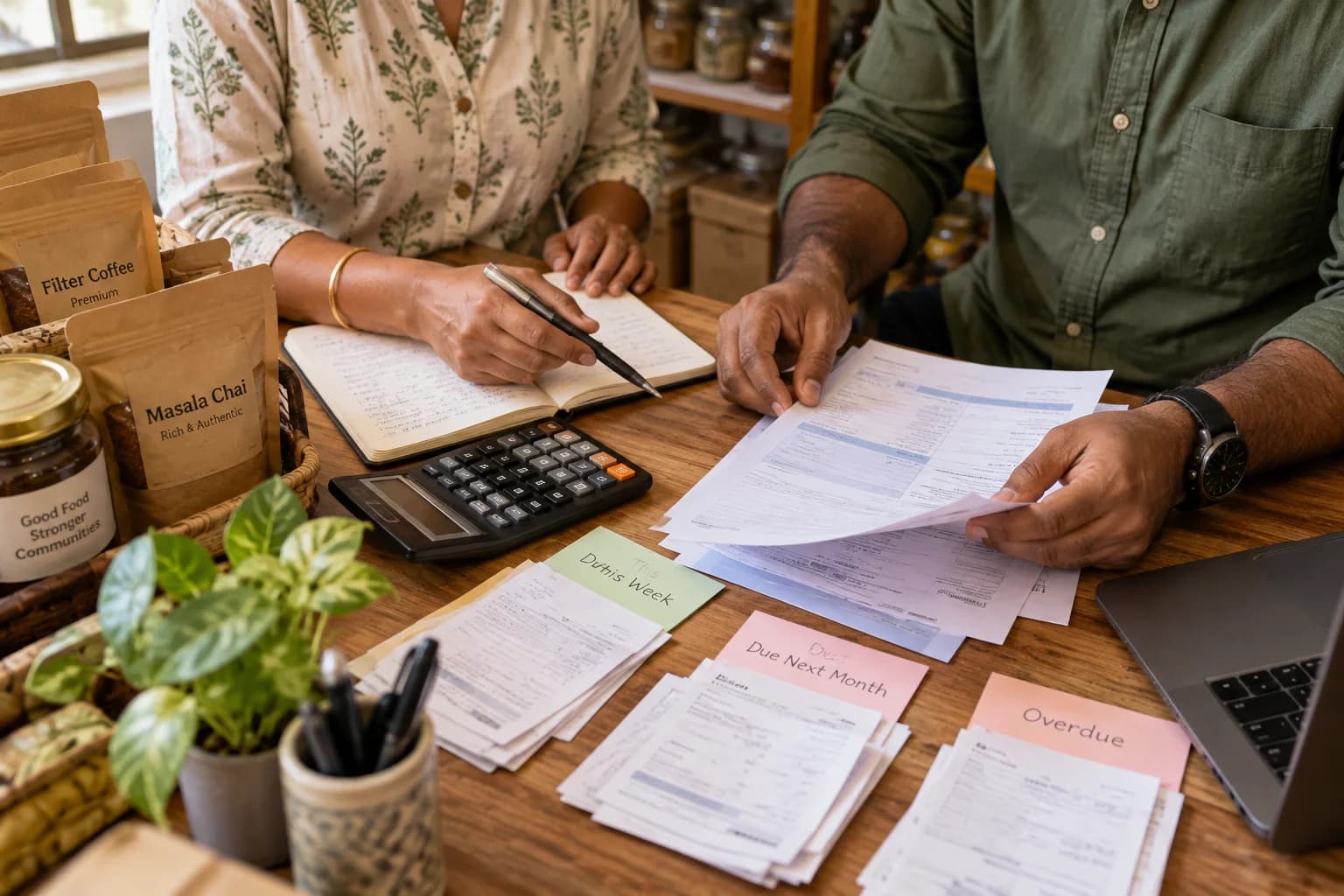
Many owners approach a bank only when the money is urgently needed, with records scattered across phones, notebooks and old folders. This session helps an owner prepare calmly beforehand: understand what a lender is trying to judge, gather the papers, tidy the numbers, and be able to explain the business and the request in plain words. It prepares the application. It does not promise that any bank will say yes.
Explore this page7 sections
A bank cannot lend against what it cannot see.
A lender is asked to trust a stranger with money on the strength of papers and a conversation. A business that is sound but poorly documented looks, on paper, like one that is risky. Mixed personal and business accounts, sales that never reach the bank statement, filings that are late or inconsistent and a request that is vague about purpose all make a lender's work harder, and a harder job tends to mean more questions, more delay or a no.
Preparation does not change the business. It changes how clearly the business can be seen. Owners who start preparing months before they need money have time to fix what can be fixed, and time to compare options without the pressure of a deadline. Requirements differ between banks and between kinds of finance, and they change, so this session teaches how to prepare and what to ask. It does not claim to know what your bank will require.
What the session covers
36 topics across 7 areas. Seven parts, in the order an owner would prepare.
What a Lender Is Trying to JudgeSee the application from the other side of the desk.5
- Can the business repay from its own earnings?
- Is there a track record, and is it documented?
- How the owner's own conduct with money and credit is viewed
- What could go wrong, and what protects the lender
- Why the same business can look different on paper and in person
Lenders differ in how they weigh these. The questions are a guide to preparation, not a prediction of any decision.
The Document ChecklistGather it before you are asked for it.6
Participants build a checklist for their own business and mark what is missing, out of date or inconsistent. The exact list depends on the lender, the kind of finance and the size of the request, so the checklist ends with the question to ask the bank: what do you need from a business like mine?
- Identity and address papers of the owner and the business
- Proof that the business exists and is registered, where applicable
- Bank statements for the period the lender will ask for
- Income tax and GST filings, where they apply to the business
- Financial statements, where the business prepares them
- Papers for any existing loans, and for any security offered
Making the Numbers Hang TogetherConsistency is half of credibility.5
- Do sales in the books match what reached the bank account?
- Do the figures in different filings tell the same story?
- Separating personal spending from business spending
- Explaining an unusual month before somebody has to ask
- What a chartered accountant should prepare or review
Never adjust figures to look better. Mismatches are fixed by getting the records right, with a professional's help.
Credit History: Yours and the Business'sKnow what the lender will see before the lender sees it.5
- Why lenders look at the credit history of the owner as well as the business
- How an individual can request their credit report from the credit bureaus, and what to check in it
- Spotting and disputing mistakes, and why that takes time
- Existing EMIs, credit card dues and guarantees given for others
- Habits that help over the following months, such as paying on time and not applying everywhere at once
Explaining the BusinessA page, not a pitch deck.5
Participants draft a one-page business summary in the session and read it aloud to the group. It is a good test of whether the business is actually understood by somebody outside it.
- What you sell, to whom, and how you earn
- How long you have operated, and where from
- Your main customers and suppliers, honestly described
- Your main costs and how they behave through the year
- Who runs the business and what happens if you are unavailable
Purpose, Amount and RepaymentThe request itself.5
- What exactly the money is for, and what it will change
- How the amount was worked out, not rounded up
- How and from what income it will be repaid
- What happens to repayment in a slow month
- The difference between finance for assets and finance for running costs
Illustrations in the session use round, made-up figures and are labelled as such.
Schemes, Guarantees and Asking the Right QuestionsAwareness, not a recommendation.5
- That government-backed credit guarantee arrangements exist for micro and small enterprises, and that eligibility and limits change
- The role of Udyam registration in such arrangements
- Why it is the lender who decides whether a scheme applies to a given loan
- Questions to ask the bank about security, fees, repayment terms and prepayment
- How to read a loan offer in full before agreeing to anything
The session does not recommend any lender or product and does not quote rates. Check current terms with the lender.
What participants leave with
- Their own document checklist, with the gaps marked
- A one-page business summary and a purpose-and-amount note
- A list of questions for the bank and for their chartered accountant
- A simple timeline for fixing what needs fixing before an application
- A short guide to reading a loan offer in full
What this session is not
- Help to apply for a loan, or a connection to any lender
- A recommendation of any bank, scheme or product
- A prediction or promise that an application will be approved
- A substitute for advice from a chartered accountant or the lender itself
Who teaches it
- Chartered accountants and finance practitioners who prepare business records
- People with experience of working with business lenders
- Owners who have been through a finance application and can describe it honestly
How the session runs
Two to three hours, in a small group. The practitioner explains what lenders look for and how records are normally organised, then each participant works on their own checklist, one-page summary and purpose-and-amount note while the practitioner moves around. The session gives general education and does not replace individual accounting, tax, legal or financial advice. Participants should not bring original documents or share account numbers; the exercises use their own knowledge of the business.
What your students leave with
- A clear picture of what a lender is trying to judge: repayment ability, track record and risk
- A document checklist for their own business, with gaps marked
- A one-page summary of the business that a banker can read in minutes
- Last year's numbers tidied into a form they can explain line by line
- A purpose-and-amount note: what the money is for, how much, and how it will be repaid
- A list of questions to take to their bank and their chartered accountant
Scheduled sessions
Nothing scheduled yet
Sessions are arranged with a college once a date is agreed. Ask us and we will find the right person for it.
A student rather than a college? See what is coming up, or ask your placement team to host this.
Prepare while you have time, and ask for money only once the records are ready.
Tell us who your students are and what stage they are at. Sessions are free for participants.