
Entrepreneur Conversations
Most founders tell the start of their business after it has worked
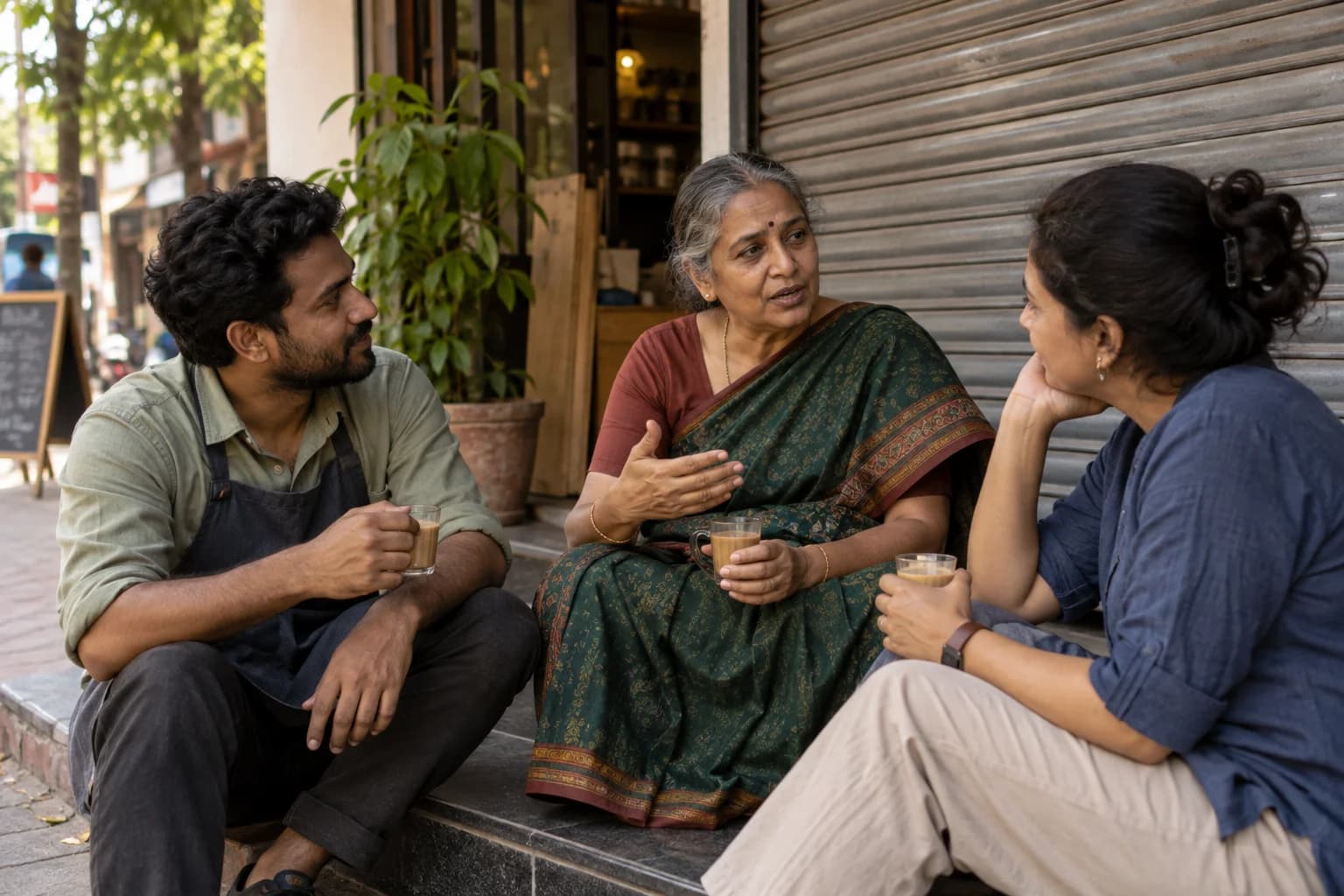
Told later, a beginning sounds like a plan. At the time it was a set of guesses, some savings, a few conversations and a lot of doubt. In this session a practising entrepreneur describes how their business actually started, including the parts that were uncertain or uncomfortable, and the room asks whatever it wants to know.
Explore this page6 sections
The beginning is the part people most want to hear about and are least often told truthfully.
Founders are usually invited to speak once the business is established. By then the early months have been smoothed into a story with a clear idea, a bold decision and a steady rise. The people listening, who may be about to start something themselves, are left comparing their own uncertainty with someone else's finished picture.
A conversation that stays close to the beginning can be more useful. It asks the founder to reconstruct what they knew then, what they were afraid of, what they spent and who helped, and not what they believe now.
The session does not tell anyone to start a business, or not to. It gives the room an honest account from one person, and the chance to ask the questions that a prepared talk would not answer.
What the speaker is briefed to be candid about
35 topics across 7 areas. Seven parts of the beginning, taken roughly in the order they happened.
Where It BeganBefore there was a business.5
- What they were doing before, such as a job, studies or another business
- What made them start, and why then and not earlier
- What they saw that they thought could be done better
- What they were unsure of at the time
- Who they told first, and how that person reacted
The aim is the real reason, which may be less dramatic than the one usually given.
The Idea and Whether It Was TestedWhat was checked, and what was assumed.5
- How the idea changed between the first version and the first customer
- What they did to find out whether anyone wanted it
- What they assumed without checking
- What turned out to be wrong
- How long it took to know the idea was workable, or that it was not
The Money to BeginKept general, with no figures required.5
The speaker is not asked for private figures, and is not asked to recommend any loan, scheme or lender. If someone in the room asks about funding, the speaker can say what they did and that others choose differently.
- Where the starting money came from, in broad terms
- How they lived while the business earned little or nothing
- What they spent on early that turned out to be unnecessary
- What they wish they had kept in reserve
- How they thought about risk, and what they would not put in
Setting It UpThe ordinary tasks of starting.5
- What they had to arrange before they could trade
- Who helped, such as an accountant, a relative or another owner
- What took longer than expected
- What they did informally at first, and what they put in order later
- What they would ask a professional about, if starting again
This is one person's experience, not guidance on what a particular business must register or file.
The First MonthsLearning on the job.5
- What a normal week looked like at the start
- What they did themselves that they now hand over
- The first thing that went wrong
- When they first felt the business was real
- A month when they considered stopping, and what kept them going
Family, Work and RiskThe part that does not appear in a business plan.5
- How the people close to them reacted
- What they gave up in order to start
- How they decided whether to leave a job or study, or not
- What the early years asked of their time and health
- How they handled doubt from others, and from themselves
What They Would Do DifferentlyUsually the most useful part.5
- What they would do earlier
- What they would leave out
- Who they would ask for help sooner
- What they believed then that they no longer do
- What they would say to somebody about to start this month
What the founder prepares
- A short, ordered account of how the business began, with real details
- One decision that worked and one that did not
- Something they did not know at the start and how they learned it
- A willingness to say that another route might suit a different person
What the room can ask
- How did you know it was the right time to start?
- What did you do while the business was earning nothing?
- What did you get wrong in the first year?
- Who helped you, and how did you ask?
- What would you check before starting, if you were me?
How the session runs
The founder speaks for about fifteen minutes from a few notes, then the rest of the time goes to questions. Questions can be put aloud, written on paper or sent to the host in advance, and a facilitator can ask the first question if the room is quiet. The founder is briefed beforehand to describe their own experience rather than give instructions, not to promote their business, and to say clearly that theirs is one path. The length and the group are agreed with the host in advance.
What your students leave with
- A realistic picture of how one business began, without the tidy version
- An idea of what a founder did not know at the start and how they found out
- A clearer sense of the money, time and risk involved in beginning
- Questions to ask before starting something of your own
- An understanding that beginnings differ, and that one path is not a rule
- A founder to put further questions to, through the host
Scheduled sessions
Nothing scheduled yet
Sessions are arranged with a college once a date is agreed. Ask us and we will find the right person for it.
A student rather than a college? See what is coming up, or ask your placement team to host this.
Hear how a business actually began, from somebody willing to say what they did not know.
Tell us who your students are and what stage they are at. Sessions are free for participants.