
Entrepreneur Conversations
Before the first ten customers, everything is a theory
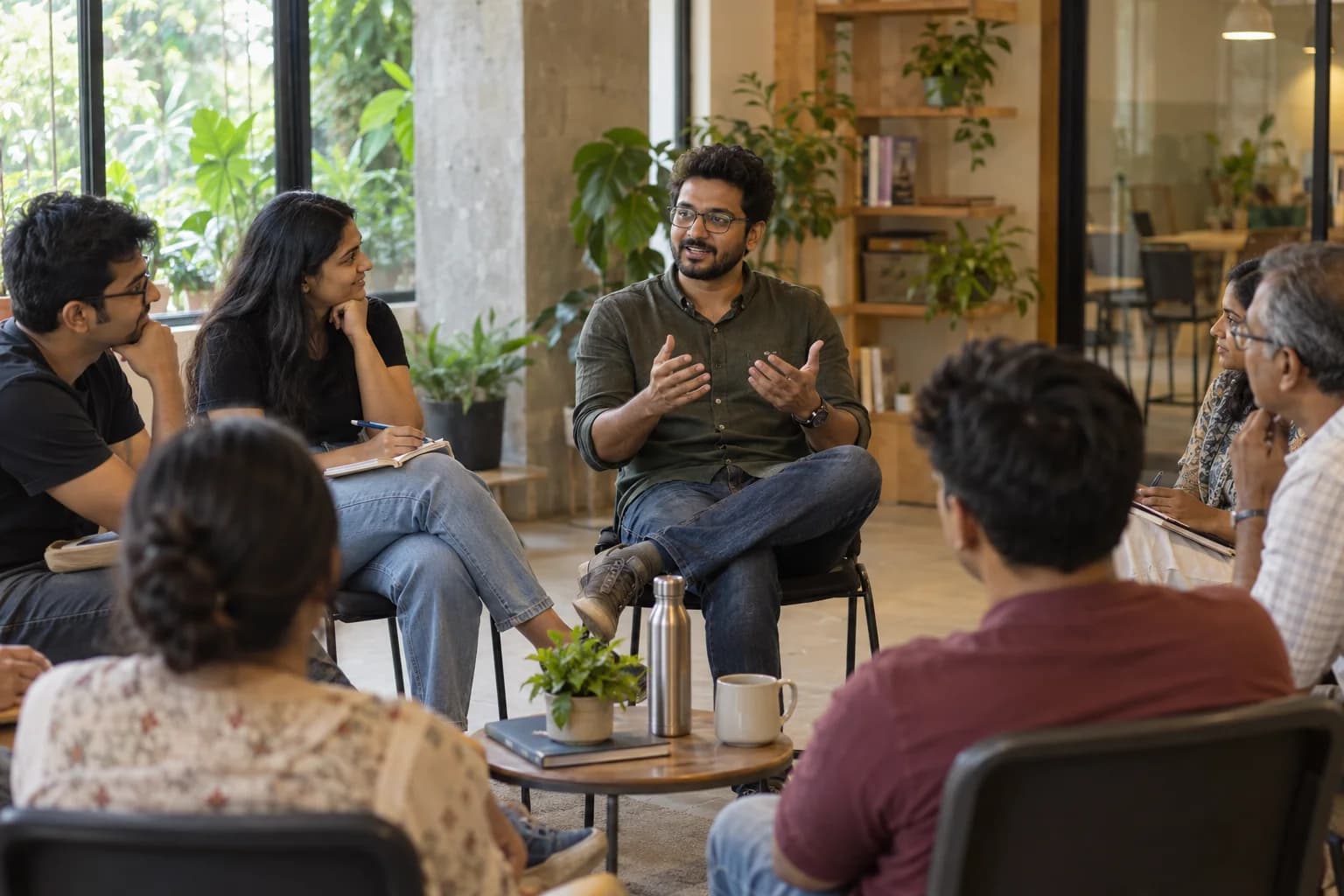
Not a strategy talk. One founder describing where their first ten customers actually came from, what they said to them, what they charged, and how much of it was uncomfortable — because the beginning is the part that often gets edited out of other retellings.
Explore this page6 sections
The earliest customers are found by hand, and nobody enjoys it.
Marketing does not exist yet, nobody has heard of the business, and there is no reason for anybody to take the meeting. The first customers come from people the founder already knows, people those people know, and a great deal of asking.
Owners further along may have forgotten how uncomfortable it was. Somebody still close to it has not.
What gets covered
31 topics across 6 areas. Six things.
Where They Actually Came FromOften not where the plan said.6 topics
- People already known to the founder
- Introductions from them
- Somewhere the founder was already trusted
- A previous employer or colleague
- A community they belonged to
- Genuine cold outreach, and how much of it worked
What Was SaidThe pitch before there was a pitch.5 topics
- How the problem was described
- What was promised
- What evidence existed, if any
- What was admitted
- What made somebody take a chance
What Was ChargedAnd whether it was enough.5 topics
- The first price, and where it came from
- Whether it covered the cost
- What was given away
- When it was raised
- What that first price did to later negotiations
The Conversations That Went NowhereOften the majority.5 topics
- How many, honestly
- What people said instead of no
- What the real objection was
- When to stop pursuing somebody
- What was learned from the pattern
The First YesAnd what changed after it.5 topics
- Who it was and why they agreed
- What had to be built afterwards
- What was learned in delivery that no research had shown
- How the second sale differed
- How long until it felt repeatable
What They Would Do DifferentlyThe most useful part.5 topics
- What they would charge
- Who they would have approached first
- What they wasted time on
- What they would have asked for help with
- What they now think they were wrong about
Questions the room can ask
- How long did the first customer take?
- How many said no first?
- Did you know what you were doing?
- What did you charge, really?
- What nearly made you stop?
- Who helped you, and how did you ask?
- What would you tell somebody starting this month?
Who this suits
- People about to start something
- People in the first year of it
- Students considering it as a path
- Anybody who has to sell something new
- Owners launching a new line into an existing business
How the session runs
One founder, one story, told in order and without a motivational arc — including the number of conversations that produced nothing and the price they were embarrassed to say aloud. Then open questions, which is where much of the value is, and which can run longer than the story.
What your students leave with
- An honest account of where early customers actually come from
- The real ratio of conversations to customers
- What was said before there was a pitch or a reputation
- What was charged, and whether it covered anything
- What the founder would do differently now
- A realistic picture of how uncomfortable the beginning is
Scheduled sessions
Nothing scheduled yet
Sessions are arranged with a college once a date is agreed. Ask us and we will find the right person for it.
A student rather than a college? See what is coming up, or ask your placement team to host this.
Start a conversation
Ask for this session
Tell us who you are and what you have in mind. A person reads it and writes back, usually within two working days.
- Tell us what you need
A topic or a question is enough to start.
- A person replies
Usually within two working days.
- Agree the next step
We work out the details together.
Before the first ten customers, everything is a theory.
Tell us who your students are and what stage they are at. Sessions are free for participants.