
Entrepreneur Conversations
What works in one market does not always carry over to the next
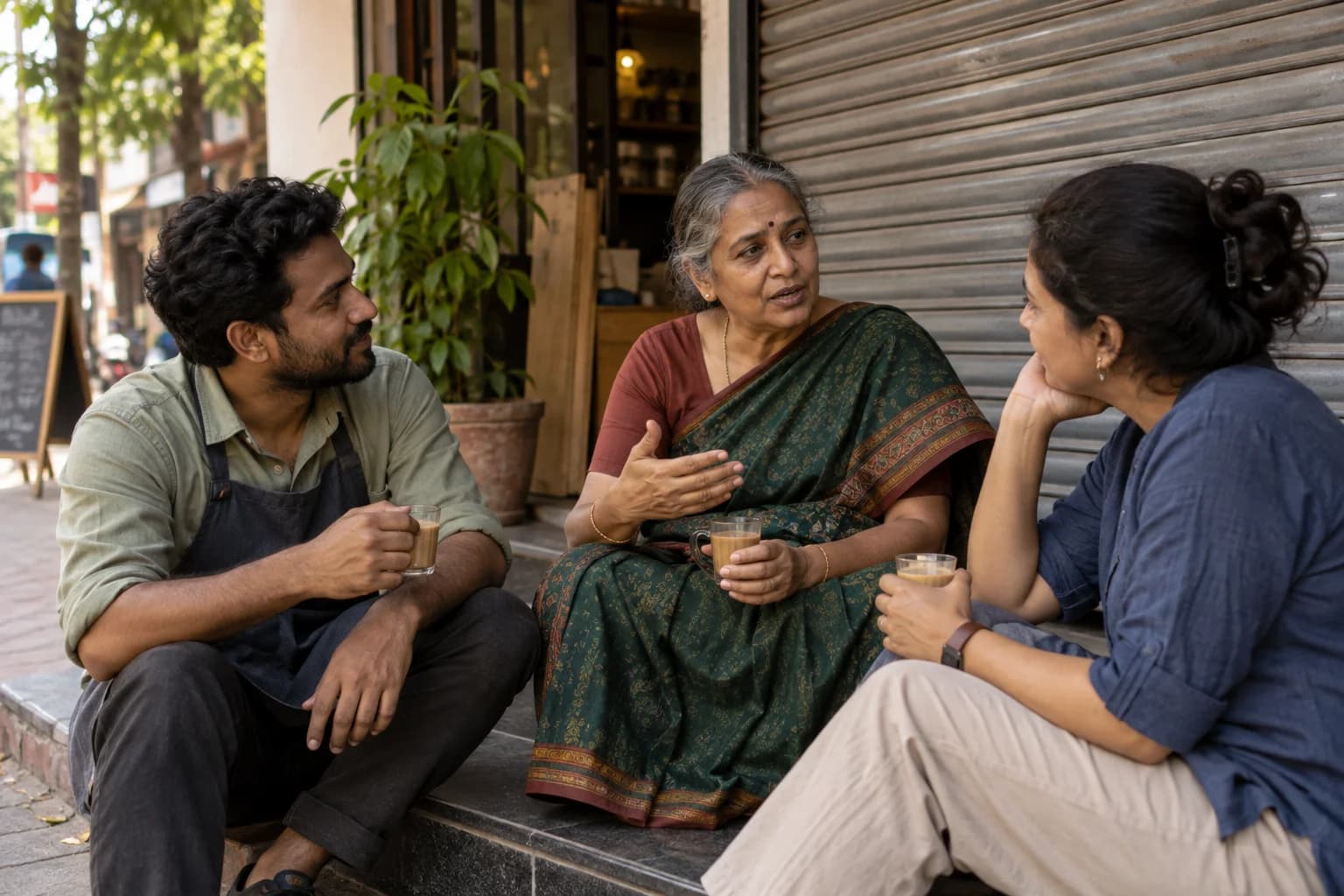
A business that does well in one place is often tempted to repeat it somewhere else: another city, another state, another kind of customer, another way of selling. In this conversation a business owner who has done it describes the decision, the testing, the surprises and the parts that had to be rebuilt, and the room asks what it wants to know.
Explore this page6 sections
Expansion is usually described after it has worked, and the decision is made before anyone knows.
Owners who have grown into a second market tend to be asked about the result. The more useful part is the stretch before it: why that market, what was checked, what was assumed without checking, and what the owner was prepared to lose if it failed.
A new market is rarely the same business in a different place. Customers buy for different reasons, competitors are different, people and suppliers have to be found again, and the owner's own time is now split. Those differences are easy to list and hard to feel until someone describes them from experience.
The conversation does not recommend expansion, and it does not suggest that any business should grow. Some owners decide to stay where they are, and that is a sound decision too. The aim is to let the room hear what one owner went through, so that their own decision is better informed.
What the speaker is briefed to cover
35 topics across 7 areas. Seven parts of the decision, in the order they came.
What 'New Market' Meant HereThe word covers very different moves.5
- Whether it was a new city or state, a new kind of customer, a new product line or a new way of selling
- What the business was like in the first market just before the move
- Whether they approached it or were pulled into it by an enquiry
- What they believed would carry over, at the start
- What they were not sure about, and said so to themselves or to others
Speakers are asked to say plainly what kind of move it was, so the room can judge how close it is to their own.
Why That Market, and Why ThenThe reasons, including the weak ones.5
- What made the first market feel full, slow or limiting
- What drew them to the new one
- Whether timing, money, a person or a competitor pushed the decision
- Reasons they now think were stronger than they seemed
- Reasons they now think were not good enough
What They Checked Before CommittingAnd what they did not.5
Speakers are not asked to teach a method. They describe what they did, and the room can judge what it would copy.
- How they learned about customers there, and from whom
- Whether they went and spent time in the place first
- What they asked existing customers or contacts
- What they assumed because it had worked at home
- The one thing they wish they had checked
The First Small TestBefore anything was built or hired.5
- How small the first step was, or how large it was and what followed
- Whether they sold before setting anything up
- What they were prepared to lose if it failed
- How long they allowed before deciding whether it was working
- What would have made them stop
What Did Not TravelThe part most owners underestimate.5
- Customer habits, payment practice or expectations that differed
- Language, culture and ways of doing business
- Suppliers, staff and partners who had to be found again
- Rules, registrations or taxes that applied differently
- What had been working at home only because people there already knew them
The speaker does not give legal or tax advice. If a rule comes up, the room is told to confirm it with a professional for their own case.
Time, People and MoneyWhat the second market took from the first.5
- How the owner's attention was divided, and what suffered at home
- Who ran the new market day to day, and how they were chosen
- How the extra cost was met, in general terms and without figures
- Whether the original business slipped while the new one was set up
- A moment when it felt too much
How They Judged It, and What They Would Do NowWithout the benefit of a neat ending.5
- How they knew whether it was working, and when
- Whether the result was clear, mixed or still unclear
- What they would check before doing it again
- What they would do differently with the same money
- Advice for an owner who is thinking about it today, and who should not be pushed into it
What the speaker prepares
- A short account of one expansion, told in the order it happened
- What went wrong or was harder than expected, as well as what worked
- Their reasoning, without naming customers, competitors or former staff
- A willingness to say 'I do not know' and 'that was only my business'
What the room can ask
- How did you decide the first market was no longer enough?
- What did you check before spending money?
- What did customers there want that your old ones did not?
- How did you run two places at once?
- How long before you knew whether it was working?
- Would you do it again, and would you do it the same way?
How the conversation runs
A facilitator opens by asking the speaker to describe the move in order, then turns quickly to questions from the room. Questions can be sent in advance or asked on the day. Before the session, the speaker is briefed on what to cover, on not promoting their own business or any product, and on saying clearly that theirs is one experience and not a method. The host chooses and invites the speaker and agrees the length and the audience with us beforehand.
What your students leave with
- A clearer idea of what 'a new market' can mean, from a new street to a new country
- A set of questions to ask before committing time and money to expansion
- An understanding of what usually does not carry over from the first market
- A sense of how small a first test of a new market can be
- A better idea of how a founder's attention is spread when a second market opens
- A speaker to put further questions to, in the room or afterwards
Scheduled sessions
Nothing scheduled yet
Sessions are arranged with a college once a date is agreed. Ask us and we will find the right person for it.
A student rather than a college? See what is coming up, or ask your placement team to host this.
Hear what it took from somebody who has already opened the second market.
Tell us who your students are and what stage they are at. Sessions are free for participants.