
Entrepreneur Conversations
A decision looks different when you know how it turned out, and different again when you did not
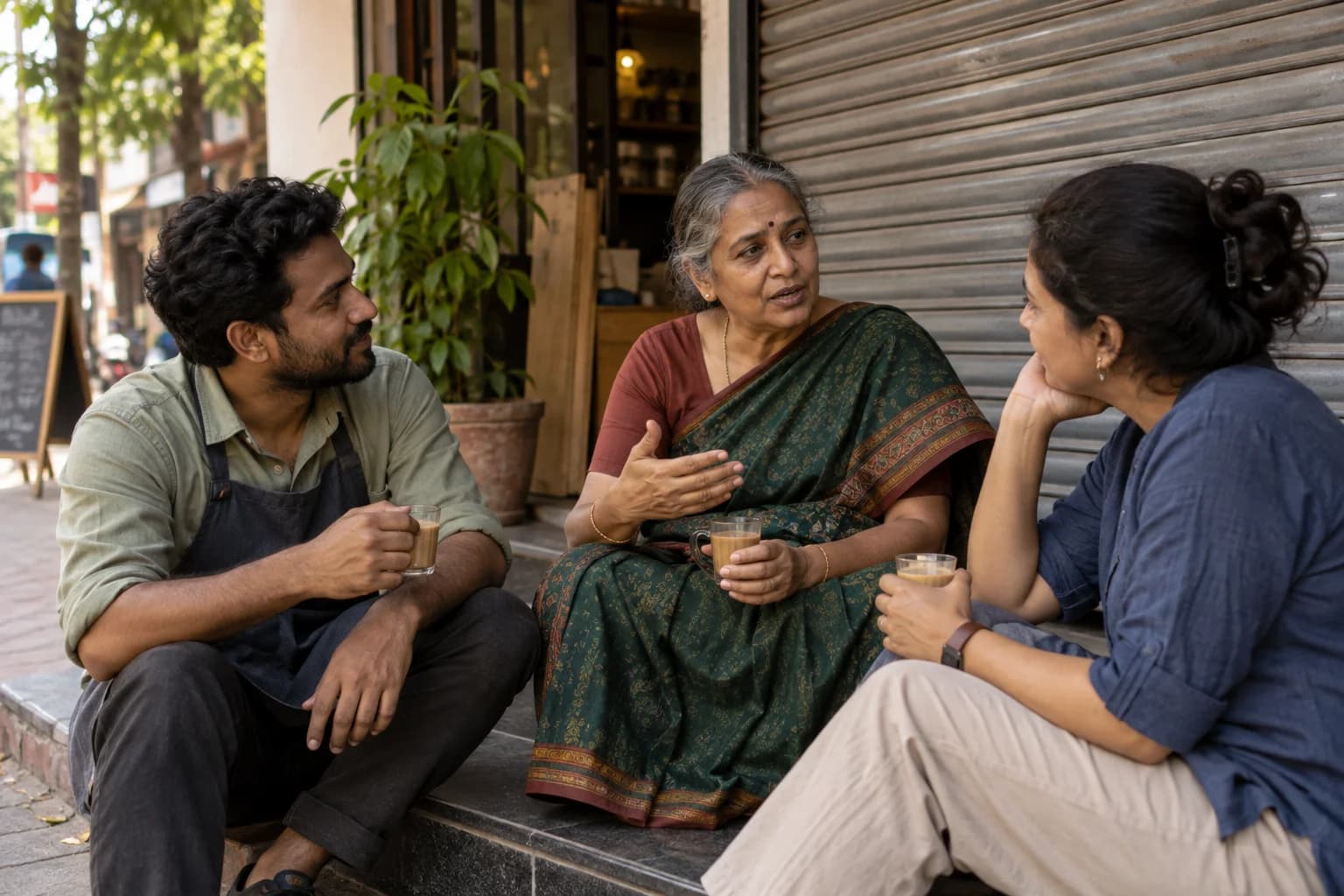
Most businesses have one decision that changed their direction, and it is usually told as a story with an ending. In this conversation an owner goes through one such decision as it looked at the time: what was known, what was not, the other options, who they asked, and what followed, including if the answer is still unclear.
Explore this page6 sections
Decisions are described afterwards, when the result is known, and that makes them sound easier than they were.
When an owner says they decided to change a supplier, enter a new line or part ways with a partner, the story that follows usually has a neat shape. It hides the weeks of not knowing, the arguments with themselves, and the possibility that they would have been wrong.
Walking through one decision in the order it was made shows a room how decisions are actually built: from incomplete information, under time pressure, with other people's opinions, and with the owner's own fears in the way. Students and newer owners can see that experienced people also decide without being sure.
The speaker is not asked to say whether the decision was right. A decision can be well made and turn out badly, or carelessly made and turn out well. The conversation separates the two, and lets the room think about its own decisions in that light.
What the speaker is briefed to cover
35 topics across 7 areas. Seven parts of one decision, from the moment it became unavoidable to what they think of it now.
The Decision in One SentenceSaid plainly at the start.5
- What was decided, and by when it had to be decided
- Why it could not be put off
- What kind of decision it was: money, people, product, direction or something else
- How much of the business it affected
- Whether it could be undone
Speakers describe the decision in general terms and are asked not to give figures or identify customers, partners or staff.
What Was Known at the TimeAnd what was not.5
- The facts they had in hand
- What they only suspected
- What they could have found out and did not
- What was changing around them at the time
- How certain they felt, honestly
The Options They Did Not ChooseEvery decision leaves roads behind.5
- The other options they considered, at least two
- What each would have cost or risked
- Why one was ruled out early
- Whether doing nothing was an option, and what it would have meant
- Whether they now think a rejected option was better
Who They Asked, and What They Did With ItAdvice is also a decision.5
The speaker does not name the people consulted. They describe the role each played in the decision.
- Who they consulted: family, partner, staff, a mentor, a peer
- Who they chose not to ask, and why
- What advice they took and what they set aside
- How they dealt with advice that conflicted
- Whether anybody told them something they did not want to hear
How Long It Took, and How It FeltThe part the retelling leaves out.5
- How long they took, and whether that was too long or too short
- What it felt like to carry the decision
- Whether there was a point at which they simply had to choose
- What they did to stop it taking over everything else
- What would have made them reverse it
What FollowedGood, bad or unclear.5
- What happened in the first weeks, months and years
- What they expected that did not happen
- What they did not expect at all
- The result as it stands today, including if it is still unclear
- Who was affected, and how they were told
Looking Back, and How They Decide NowJudging the decision fairly.5
- Whether they would make the same decision with what they knew then
- The difference between a good decision and a good result, in their own words
- What they now do differently when a large decision comes up
- What questions they ask themselves first
- Advice for an owner facing something similar, offered with care
What the speaker prepares
- One decision, told in order and as it looked at the time
- At least two alternatives they did not choose
- An honest account of the result, including doubts about it
- A willingness to say that another owner might have decided otherwise
What the room can ask
- How did you know it was the time to decide?
- What did you not know when you chose?
- Who did you ask, and who did you not?
- Were you afraid of being wrong?
- Would you decide the same way today?
- What do you ask yourself before a big decision now?
How the conversation runs
The speaker walks through the decision in about fifteen minutes, in the order it happened, and a facilitator then takes questions from the room, sent in advance or asked on the day. The facilitator may ask the speaker to say what they knew and did not know at the key point, so that the room hears the decision and not only the result. Before the session the speaker is briefed on not giving financial or legal advice, not naming people involved, and not promoting their business. The host chooses and invites the speaker and agrees the length with us.
What your students leave with
- An understanding of how one owner actually reached a hard decision
- A view of the difference between a good decision and a good outcome
- A set of questions an owner can ask themselves before a decision they cannot easily undo
- A sense of how and when to ask others, and how to weigh what they say
- An idea of how to look back at a decision without being unfair to yourself
- A speaker to ask further questions, in the room or afterwards
Scheduled sessions
Nothing scheduled yet
Sessions are arranged with a college once a date is agreed. Ask us and we will find the right person for it.
A student rather than a college? See what is coming up, or ask your placement team to host this.
See how a real decision was made, with the doubts left in.
Tell us who your students are and what stage they are at. Sessions are free for participants.