
Business Reality
The version that does not appear in the interview
Founder stories are usually told backwards, with the ending known and the fear removed. This session asks for the other version: the payroll that nearly did not clear, the hire that went wrong, the idea that failed and what it cost to admit it.
Explore this page6 sections
Success stories are told backwards, and that makes them useless.
Once the outcome is known, every decision on the way looks deliberate. Students absorb a version of business where the founder was confident, the plan was sound and the difficulty was character-building rather than genuinely frightening.
What is actually instructive is the period when it was not clear it would work — which is most of it, and which almost never gets described.
What gets talked about
35 topics across 7 areas. Seven things founders normally skip.
The Month Payroll Nearly Did Not ClearCash, described from the inside.5 topics
Profitable businesses run out of money. Students learn this as a sentence; founders learn it as a specific week they still remember.
- What caused it
- What they did in the two weeks before
- Who they told, and who they did not
- What they would do differently
- How they changed the terms afterwards
The Hire That Went WrongExpensive, and rarely discussed.5 topics
- What they got wrong in the hiring
- How long before they admitted it
- What it cost in money and momentum
- How they handled the exit
- What they changed in the process
The Customer They Should Have RefusedRevenue that cost more than it paid.5 topics
- Why they took the work
- What it actually cost in time and morale
- What it displaced
- How it ended
- What they now decline
The Idea That FailedAnd how long it took to stop.5 topics
- What they believed
- What the evidence actually said
- Why they kept going past the point they knew
- What it cost to stop
- What they kept from it
The Partnership Conversation They Did Not HaveUsually about equity, roles or exit.5 topics
- What was assumed rather than agreed
- When it surfaced
- What it cost the relationship
- What they would write down now
- Why it should happen before anything is built
Competing With Somebody BiggerWho can outspend you on everything.5 topics
- What they stopped trying to match
- What they could do that a larger firm could not
- Which customers they conceded
- What actually worked
- What they wasted money on first
What They Would Do DifferentlyThe most useful question, asked last.5 topics
- What they would start earlier
- What they would refuse
- What they overbuilt
- Who they would have asked for help
- What they now think they were wrong about
Ground rules for the session
- No motivational arc — the point is the difficult middle
- Specific rather than general: a month, a number, a name changed
- What it cost, stated plainly
- What they still do not know
- Students may ask anything, including about money
Why a management student should hear this
- Most business teaching describes companies that worked
- The failure modes are more transferable than the success stories
- You will work for somebody making these decisions
- You may make them yourself sooner than you expect
- It is the honest counterweight to a syllabus of case studies
How the session runs
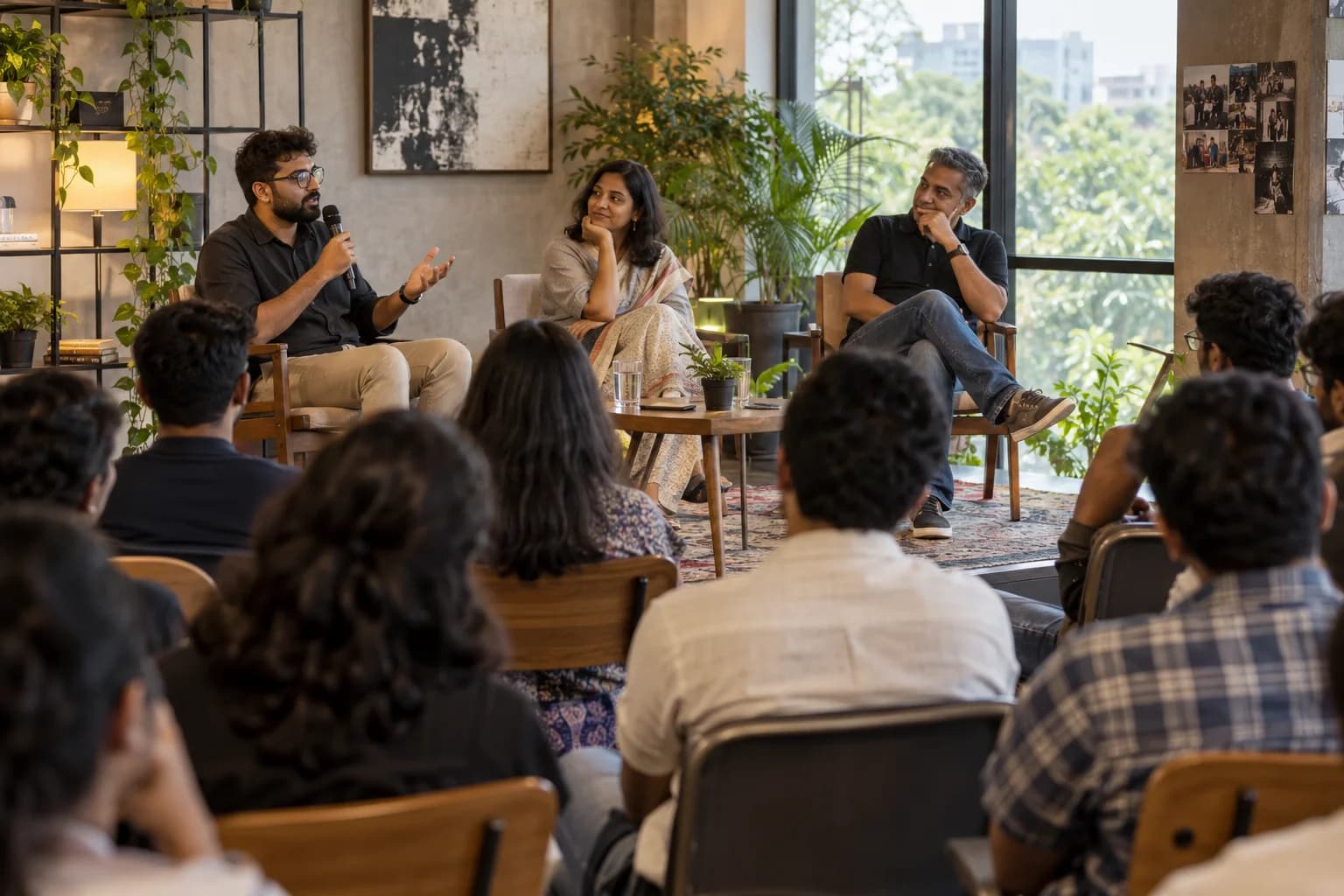
Two or three founders, briefed in advance that the useful material is the part they normally leave out. Each takes one difficult period and describes it specifically — what happened, what it cost, what they did. Students ask directly, including about money, which is the question they usually want to ask and rarely do.
What your students leave with
- An honest account of what running a business actually feels like
- Cash-flow pressure described from inside it
- The real cost of a bad hire and a wrong customer
- How long people persist past the evidence, and why
- The conversations worth having before starting anything with somebody
- A counterweight to a syllabus made of businesses that worked
Scheduled sessions
Nothing scheduled yet
Sessions are arranged with a college once a date is agreed. Ask us and we will find the right person for it.
A student rather than a college? See what is coming up, or ask your placement team to host this.
Start a conversation
Ask for this session
Tell us who you are and what you have in mind. A person reads it and writes back, usually within two working days.
- Tell us what you need
A topic or a question is enough to start.
- A person replies
Usually within two working days.
- Agree the next step
We work out the details together.
Success stories are told backwards. This is the other version.
Tell us who your students are and what stage they are at. Sessions are free for participants.