
Business Careers
A student's first interview should not be the one that counts
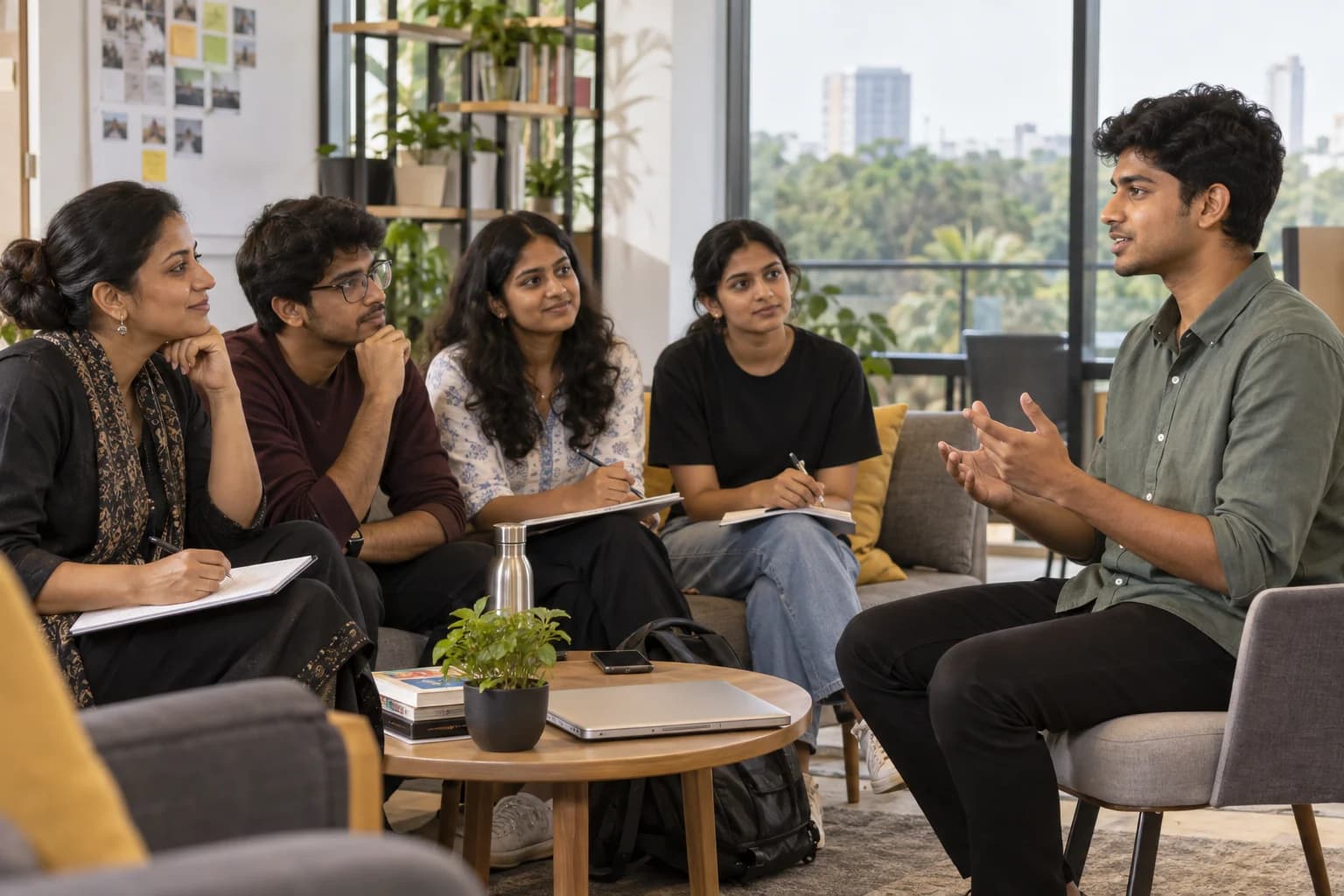
Companies rarely explain a rejection, so students fail an interview and change nothing specific. In this session people who interview business graduates at work run a mock round for each student, in the function the student is aiming at, then tell them aloud and in writing what worked and what to fix.
Explore this page6 sections
Feedback is the part real interviews leave out.
A student who is rejected usually hears nothing, or a polite email, and concludes something vague: that they lacked confidence, or that the company wanted somebody else. The real cause is often specific. They could not explain their own internship, gave answers with no example in them, did not know what the company does, or went silent on a numbers question.
A mock interview with an honest interviewer finds that cause in thirty minutes. It is also the only safe place to have a first interview, and students who have done one tend to walk into the real one calmer.
What the interviewer observes
31 topics across 7 areas. Seven things, each with a line in the feedback. 6 apply to almost any business; the rest only in a particular case.
Introduction and MotivationThe first few minutes set the tone.4
- A one-minute introduction that points towards the role
- A specific reason for this function and this employer
- Joining on time, with a resume and the posting to hand
- On video: camera, sound and a quiet place
“Tell me about yourself” is a question about direction, not a recital of the resume.
Functional QuestionsThe fundamentals of the role being practised.5
- Sales and marketing questions, including a “sell me this” and a campaign critique
- Finance and analyst questions on statements, ratios and Excel
- HR questions on process, a people scenario and awareness of the rules
- Operations and supply-chain questions on process, cost and service
- Reasoning aloud when the answer is not known
Case or GuesstimateIf it appliesFor students aiming at analyst, strategy and consulting-style roles.4
- A short case or an estimation, as a practice round
- Clarifying questions before answering
- Showing the arithmetic
- A clear recommendation at the end
Their Own ExperienceThe question almost every fresher is asked.5
- What an internship, project or club role involved
- Which part the student did
- What went wrong and what they did about it
- What the student would change now
- Not claiming a result they cannot explain
Honesty about a group effort survives a second question. A vague claim over the whole thing does not.
Behavioural QuestionsA structure, and a true story.5
- A disagreement in a team
- Something that went wrong
- A deadline nearly missed
- A backlog, gap year, low marks or a change of field
- Situation, what you did, what happened
Communication and MannerClarity, not accent.4
- Answers with a beginning and an end
- Listening to the whole question
- Checking what was meant when unsure
- Pace, and being easy to hear
Questions and Using the FeedbackA mock interview is wasted if the note stays in a bag.4
- Two real questions about the job
- Choosing the two things that matter most
- Practising the weakest answer aloud
- Booking a second mock two or three weeks later
Rounds on offer
- HR or managerial round
- Sales, marketing, finance, HR or operations functional round
- Short case or guesstimate
- Panel round
- Interviews on video
What the written note contains
- What went well
- Two or three things to fix, in plain words
- One question the student struggled with, and a better approach
- A practice suggestion for the next fortnight
- No score, and no ranking against other students
How the session runs
Each student sits an interview of about twenty to thirty minutes with a person who interviews business graduates at work, followed by about ten minutes of spoken feedback and a short written note. Students choose the round closest to the role they are preparing for. How many students can be seen in a day depends on how many interviewers attend, so we agree numbers with the college beforehand; students who want a mock interview get one, even if it takes a second date. Feedback belongs to the student. The college receives a summary of common patterns, never individual results.
What your students leave with
- A full mock interview for each student who wants one
- A round matched to the function and role the student is aiming at
- Spoken feedback straight after, and a short written note
- The two or three things most worth fixing, named plainly
- Practice explaining their own internship, project or club work under questioning
- A plan for the next fortnight of practice
Scheduled sessions
Nothing scheduled yet
Sessions are arranged with a college once a date is agreed. Ask us and we will find the right person for it.
A student rather than a college? See what is coming up, or ask your placement team to host this.
Practise where failing costs nothing.
Tell us who your students are and what stage they are at. Sessions are free for participants.