
Read the article
Start with who is asked, because the answer is broader than people expect. Working professionals at any stage past their first couple of years. Entrepreneurs and business owners of any size. Recruiters and hiring managers. Interviewers, for the mock interview drives. Alumni of the institutions we work with. What they have in common is not seniority; it is that they do something students are trying to understand, and can talk about it plainly. A five-year engineer describing their actual job can be more useful to a final-year student than a vice president describing the industry.
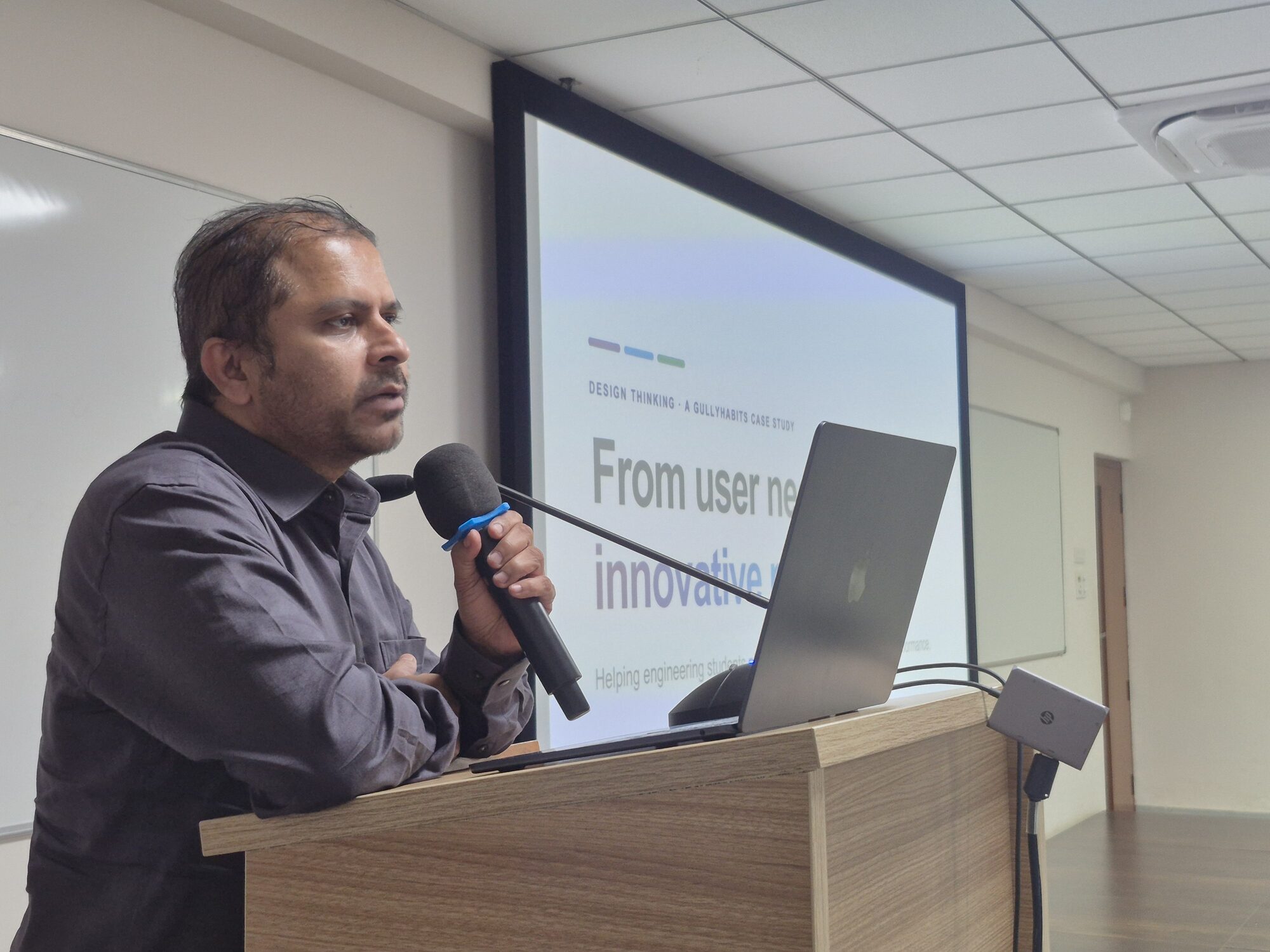
What the session asks of you is a short account of your own work, how you got here, what a normal day is, what surprised you, and then questions. The questions are the point. We build sessions so the question-and-answer takes most of the time, because that is where students get the thing they came for: an answer to their own specific worry from somebody who has been past it. You do not need slides. You do not need a prepared talk. You need to be willing to answer honestly, including 'I don't know' and 'I got that wrong'.
What it does not ask is polish. Answering a student's question is not public speaking; it is a conversation with an audience. Nervousness is fine, and an audience of students finds it reassuring. The thing that does not work is performance, the rehearsed inspirational talk, and we ask you not to bring one.
There is one rule, and we ask every speaker to agree to it before the session: it is not a pitch. You may explain what you do and where you work, because that is the point. You may not sell to the room, recruit from it, or ask students to sign up for anything. It is also why students can trust what they hear. There is a separate piece explaining the rule in detail.
What GullyFuture does: everything else. We work with the institution to fix the date, the room and the group. We tell you who the students are, what year, and what they have been asking about. We facilitate on the day so you are never left managing silence. Afterwards we record what happened, the attendance, what was asked, because we count what we do and only what we do. Participation is free for students, we do not charge institutions for a standard session, and speakers are not paid, so there is no commercial arrangement between you and anyone.
Some questions people ask before saying yes. Can I speak online? Ask us about the format for the institution you have in mind; the same approach of a short account and then questions applies. Can I mention where I work? Yes. Do I need to prepare slides? No. What if a student asks something I cannot answer? Say so, and say how you would find out; that is a useful thing to show a student. What if my career has been unglamorous or has gone wrong in places? Say so; that can be the most useful thing in the room.
What it costs you: a couple of hours on the day, plus a conversation with us beforehand. Preparation is mostly remembering: what your first job was actually like, what you wish somebody had told you, what the students probably believe about your work that is not true.
One more thing, because it is how we hope the whole thing works: people who attend a session and find themselves thinking 'I could answer that' are exactly who we want to hear from. If you are reading this because you attended one and are wondering whether you count: you do.